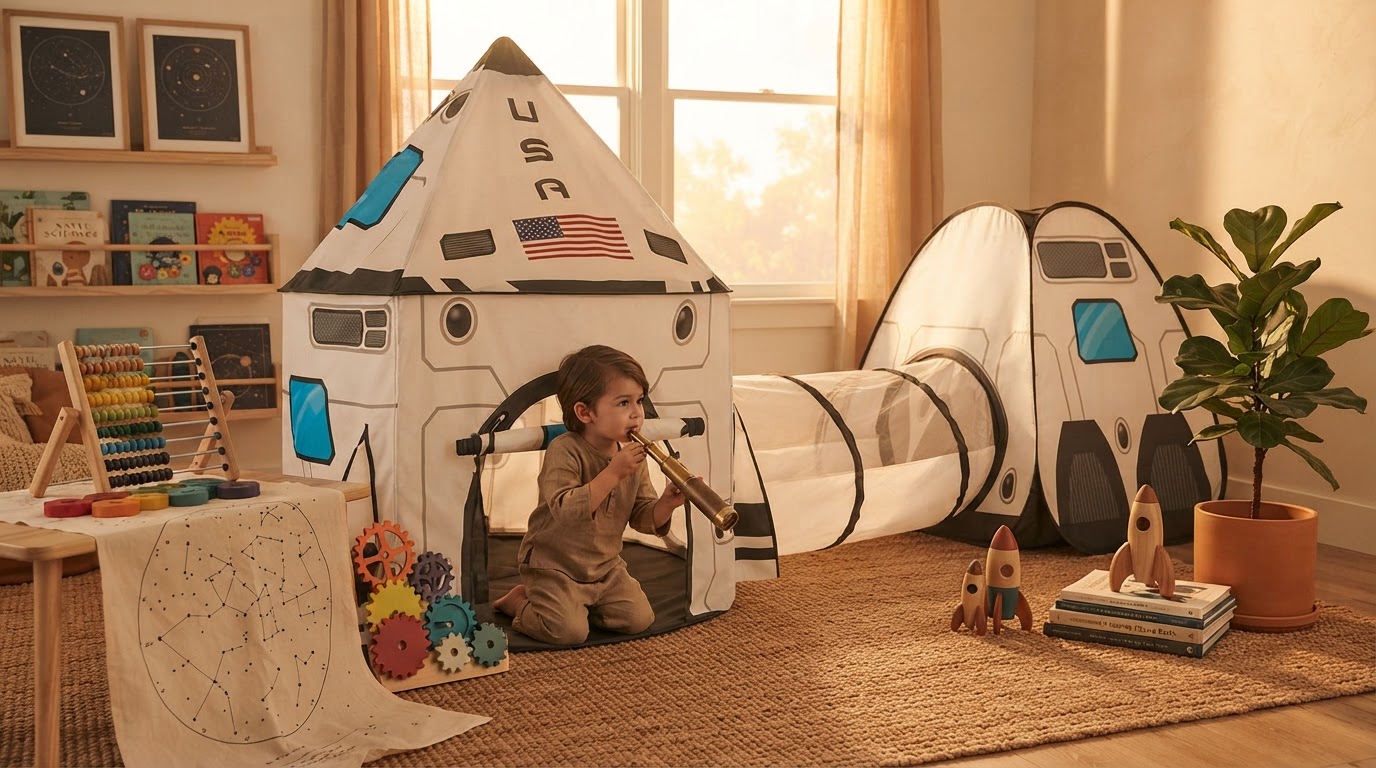
Rocket Ship Tent Integration With STEM Learning
 Daniel OkaforField Tester
This evaluation examines how physical play structures serve as foundational tools for early childhood science and engineering concepts. It is written for parents and educators looking to bridge the gap between sedentary screen time and active, imaginative learning.
The Challenge of Early STEM Engagement
Testing this for several weekends with a group of local families, and the primary frustration was the 'discard rate' of traditional space-themed kits. A plastic rover is interesting for a moment, but it doesn't provide a context for why a rover exists. Without a home base, the play becomes scattered. This is where the concept of a space station playhouse for kids becomes critical. It acts as a laboratory. Day three is where the shift: the children stopped just 'playing house' and started simulating missions. What surprised me was how quickly they began incorporating other tools—magnifying glasses, notebooks, and flashlights—into the enclosure. They weren't just sitting; they were conducting research. This physical movement between the 'ship' and the 'lunar surface' (the living room rug) is what cements the engineering mindset. It turns a static toy into a dynamic system, which is the core of STEM education. I watched as they struggled to fit a large 'satellite' through the door, which led to a genuine discussion about dimensions and planning—practical engineering lessons learned without a single worksheet.
Rocket Ship Tent as a Technical Hub

Photo by Kha Ruxury on Pexels
a heavy rainstorm kept us indoors for forty-eight hours. Usually, this results in total chaos, but the tent provided a defined boundary for their energy. the kids began to treat the interior as a specialized zone where 'science' happened. They brought in their pretend play spaceship cockpit toy to finalize the dashboard, creating a high-density learning environment. The tent’s ventilation was sufficient even with two kids and a pile of stuffed 'aliens' inside, which is a detail I often see overlooked in pop-up designs. A better layout is to set it up on a non-slip mat from the start; on hardwood floors, the 'blast off' maneuvers can get a bit slidey. However, the sheer volume of the interior meant they could fit a full space station playhouse for kids setup inside without feeling cramped. It effectively solved the problem of toy scatter by giving every space-themed gadget a specific 'docking station' within the tent walls.
Selecting the Right Space Learning Environment
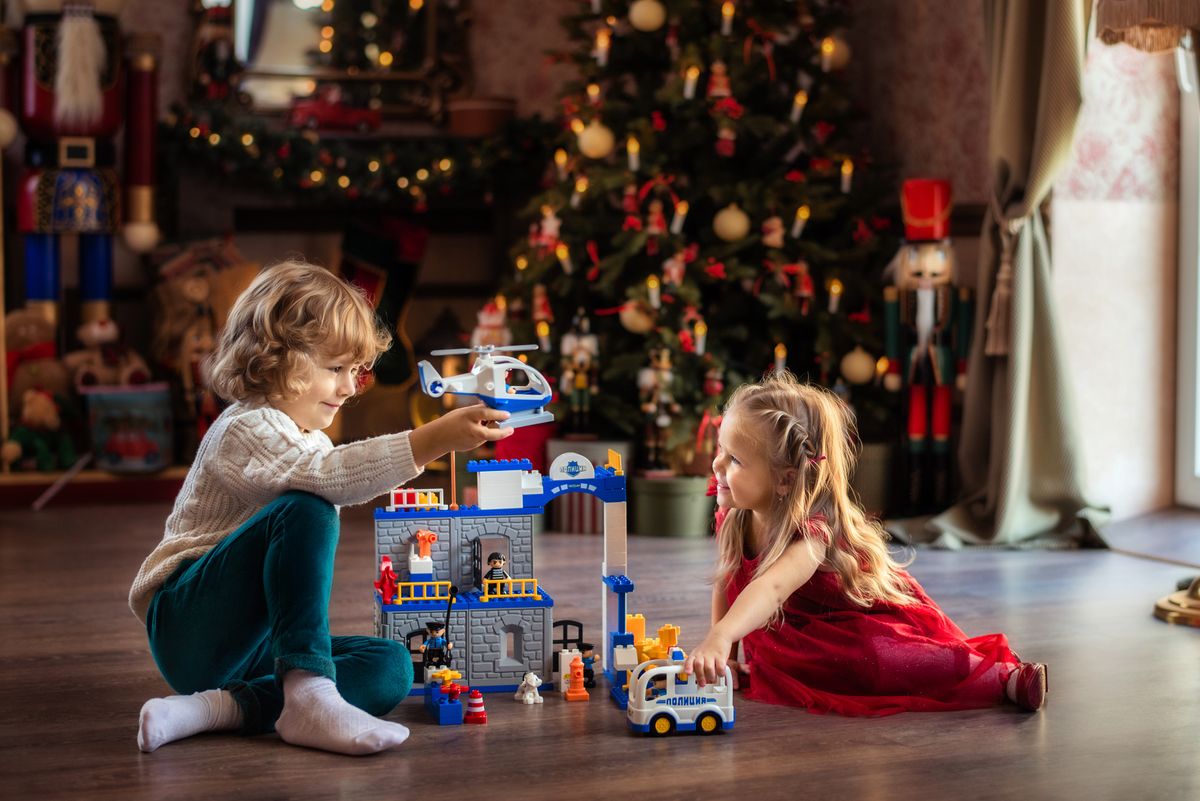
Photo by Polesie Toys on Pexels
Choosing a physical structure for STEM play requires looking past the graphics and focusing on the utility of the space. When you are looking for a space themed playhouse, you have to consider how it will interact with the other toys in the ecosystem. that the best setups are those that don't dictate exactly how a child should play, but rather provide the infrastructure for them to invent their own rules. A good rocket ship tent should be a blank canvas for a pretend play spaceship cockpit toy to be installed, removed, and upgraded as the child’s understanding of space grows. If the tent is too small, it becomes a closet; if it's too flimsy, it becomes a hazard.
To ensure you are getting a setup that actually contributes to a child's development, follow this framework during your selection process:
- Verify Internal Clearance: Ensure the height allows a five-year-old to stand or at least sit upright comfortably with head clearance to avoid feelings of confinement.
- Check Tunnel Compatibility: Look for a rocket ship tent for kids that features a standardized tunnel port, as this allows for future expansion into a multi-room lunar base.
- Assess Material Breathability: Five-year-olds generate significant heat during 'missions'; mesh panels are non-negotiable for safety and comfort during long-duration play.
- Evaluate Setup Speed: For STEM learning, the focus should be on the activity, not the assembly. A pop-up rocket ship tent that deploys in under three minutes prevents the child from losing interest before the 'mission' begins.
- Inspect Structural Resilience: The poles or wire frames must be able to withstand the lateral pressure of a child leaning against the walls while reaching for 'controls.'