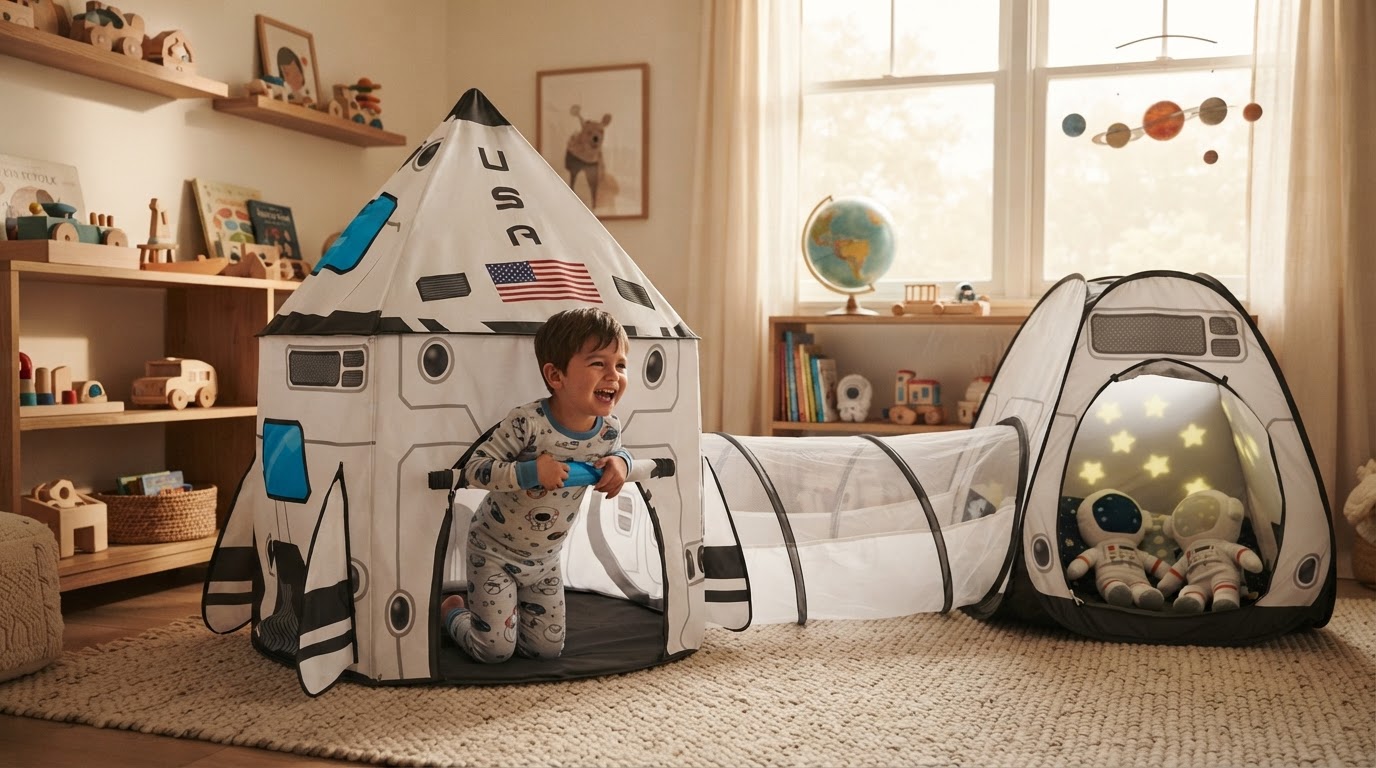
Optimizing a Rocket Ship Tent for Indoor Active Play
 Sam VasquezBuying Guide Lead
September 7, 2026. This guide details how to select and configure a space themed playhouse to maximize floor space and engagement. It is written for parents and caregivers looking to transform standard playrooms into immersive astronomical environments.
The Challenge of Indoor Space Play
Finding a way to facilitate active play in a confined living room often leads to a choice between flimsy pop-ups and bulky permanent structures. According to 9 Spaceship Playhouse ideas - Pinterest, many parents attempt to build DIY structures using wood or heavy cardboard, but these often lack the portability required for modern homes. While a custom-built backyard playhouse offers durability, it fails the indoor test where footprint and assembly speed are the primary constraints. I have seen many families struggle with the 'one-and-done' nature of elaborate DIY projects that eventually just become clutter.
If you are on a budget, you might look at basic pop-up tents found at big-box retailers. These often feature a silver roof and blue star-spangled body, according to Foter, which provides a visual baseline for the category. However, these basic models frequently lack the structural integrity to support an outer space tent with tunnel attachment, which is a significant drawback if you want to expand the play area later. Between these two—the heavy DIY build and the flimsy pop-up—most people need something that balances weight with features. The goal is to find a space station playhouse for kids that feels like a destination rather than just a nylon bag in the corner.
Maximizing the Rocket Ship Tent Experience

Photo by Polesie Toys on Pexels
The Rocket Ship Tent addresses these common spatial issues by utilizing a vertical design that minimizes the floor footprint while providing enough internal height for standing. Unlike the horizontal 100% cotton models found at RolePlay Kids, which prioritize fabric feel but often require more sprawling floor space, the Rocket Ship Tent focuses on a silhouette that fits into bedroom corners.
When setting this up, the primary objective is to ensure the pretend play spaceship cockpit toy elements are accessible. I recommend placing the tent at least two feet away from walls to allow the mesh windows to breathe and to provide a clear path for the entry flap. If you are integrating stem space toys for 5 year olds, the interior of the tent serves as a focused 'mission control' zone. Here's what I'd actually buy: I prefer a synthetic blend for the tent body over pure cotton because it wipes clean after spills and holds the vibrant 'mission control' graphics better over time.
Skip this if you have a dedicated outdoor playground and no room indoors; these units are specifically engineered for carpeted or hardwood environments. If you are looking for a rocket ship tent for kids that can actually hold up to daily 'blast-offs,' the internal pole structure is the most critical spec to check. Many generic tents use thin fiberglass that splinters, whereas the Rocket Ship Tent uses reinforced casing to prevent pole exposure during rough play. This structural safety is what makes the Rocket Ship Tent integration with STEM learning possible, as kids can move around inside with equipment without the walls collapsing on their project.
A Decision Framework for Space Playhouses

Photo by cottonbro studio on Pexels
Choosing the right vessel for your child's room depends on how you plan to use it. If the intent is purely aesthetic for a photo shoot, the cotton tents are beautiful. But for actual daily play, the functionality of the Rocket Ship Tent usually wins out. When evaluating your options, use this checklist to ensure the product meets the demands of an active household:
- Footprint vs. Height: Ensure the tent is at least 50 inches tall but no more than 40 inches wide to maintain stability without consuming the entire room.
- Ventilation: Look for at least two mesh windows to prevent the interior from becoming too warm during extended play sessions.
- Expansion Ports: Verify if the tent includes a circular port for an outer space tent with tunnel connection, which allows for multi-room 'space station' configurations.
- Tactile Realism: Check that the pretend play spaceship cockpit toy graphics are printed on the interior walls, not just the exterior, so the child feels immersed while inside.
- Assembly Time: A high-quality tent should take one person less than five minutes to pitch and strike.