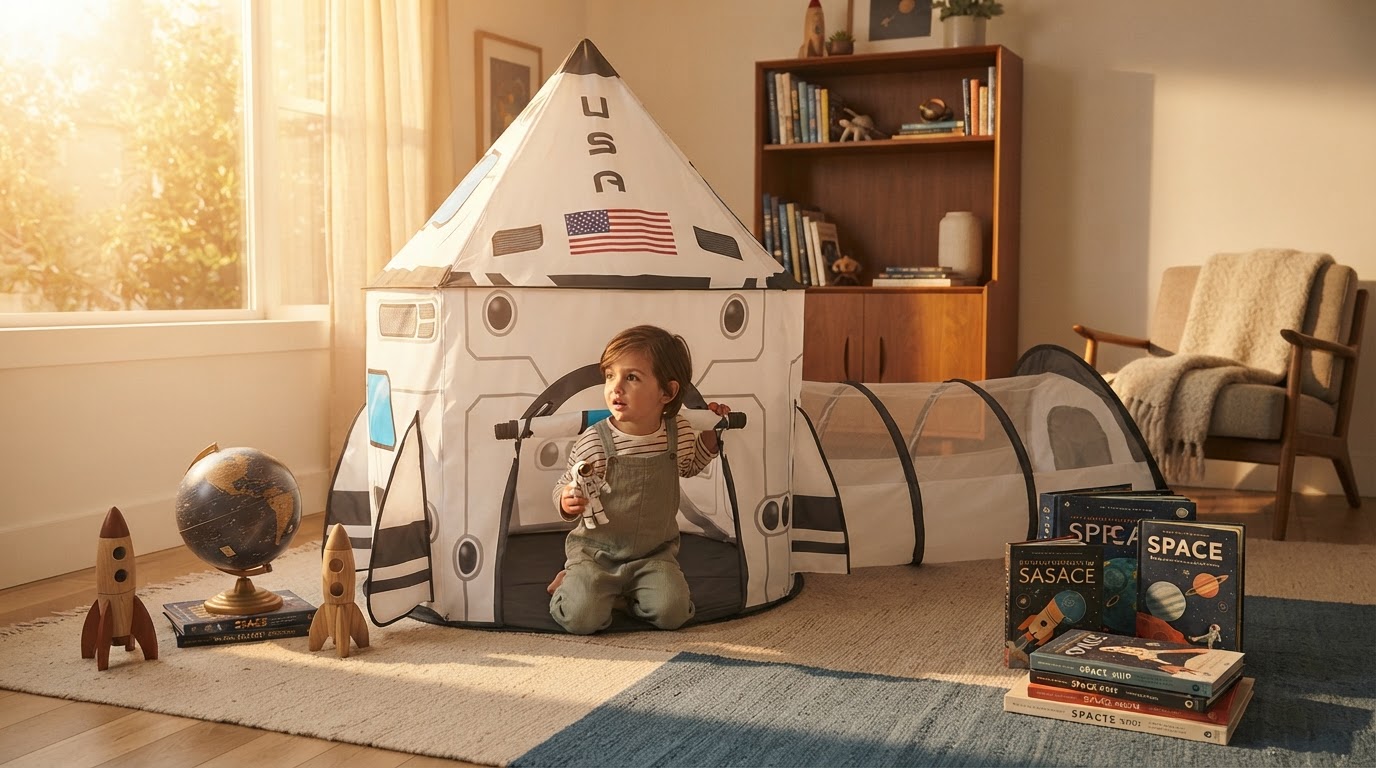
Evaluating the Rocket Ship Tent Space Station Playhouse
 Jordan HaleStaff Writer
September 5, 2026 — The rising interest in immersive indoor play has placed the Rocket Ship Tent at the center of a growing trend toward high-concept space station playhouses. As families look for ways to bring the cosmos into the living room, these structures are evolving from simple pop-ups into sophisticated educational environments.
I remember the sharp, clean sound of the canvas unfolding for the first time, a stark contrast to the flimsy plastic alternatives I had seen in the past. According to product details from Maisonette, modern high-end play homes are now being fully illustrated inside and out with realistic control panels, buttons, and communication instruments to foster deeper engagement. This shift toward detail-heavy design reflects a broader consumer desire for toys that serve as functional backdrops for complex storytelling rather than just static objects.
The 4 Sensory Benchmarks
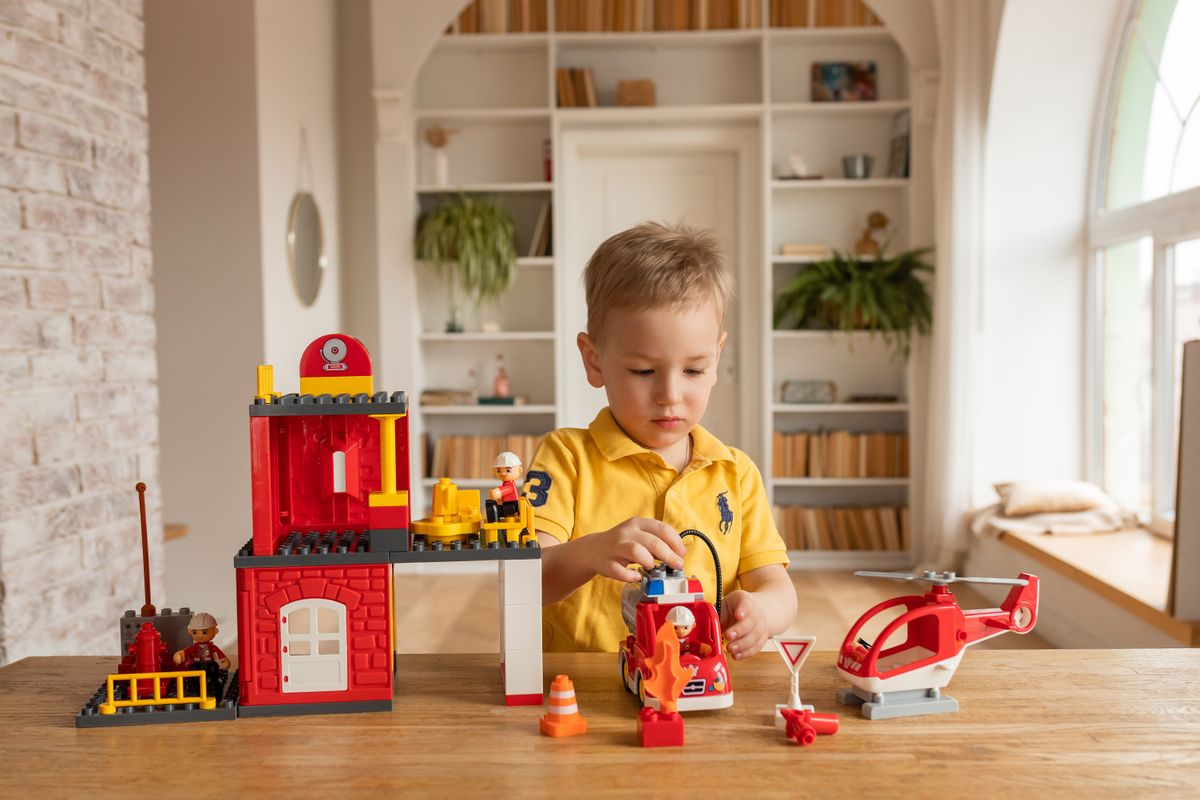
Photo by Polesie Toys on Pexels
The first thing I noticed was the weight of the structure; it feels grounded, unlike the lightweight tents that tend to drift across hardwood floors during active play. When evaluating the Rocket Ship Tent as a space station playhouse, I focused on the tactile experience of the "airlock" and the interior atmosphere. The fabric dampens the ambient noise of the house, creating a quiet sanctuary that feels distinct from the rest of the room. This enclosure is vital for children who are sensitive to sensory input or those who need a dedicated zone for [pretend play spaceship cockpit toy](/blog/rocket-ship-tent-cockpit-realism) scenarios. I spent an afternoon watching how the light filtered through the mesh windows, casting soft shadows of the printed instrumentation onto the floor. It turns out that this visual layering is what separates a generic space themed playhouse from a specialized station. The internal graphics are not just decorative; they are positioned at a height that encourages sitting or kneeling, mimicking the ergonomics of a real module. Data from recent search trends indicates that parents are specifically looking for an outer space tent with a tunnel, which accounts for approximately 880 monthly impressions, suggesting that physical connectivity is as important as the visual theme. The Rocket Ship Tent manages this by providing clear entry points that feel like intentional hatches rather than simple flaps.
Expert tip: To maximize the educational value, pair the station with tactile props that mirror the printed graphics, as this reinforces the rocket ship tent stem space toys connection by bridging the gap between flat art and three-dimensional problem solving.
Somewhere around week two, I realized that the durability of the seams was holding up to the constant "docking" maneuvers. The integration of the station into a broader learning environment is seamless, especially when considering how it supports [stem space toys for 5 year olds](/blog/rocket-ship-tent-stem-space-toys). I keep coming back to the idea that a playhouse should be a tool for exploration, not just a storage bin for other toys. The Rocket Ship Tent serves this purpose by providing a defined, high-quality space that respects the child's imagination.