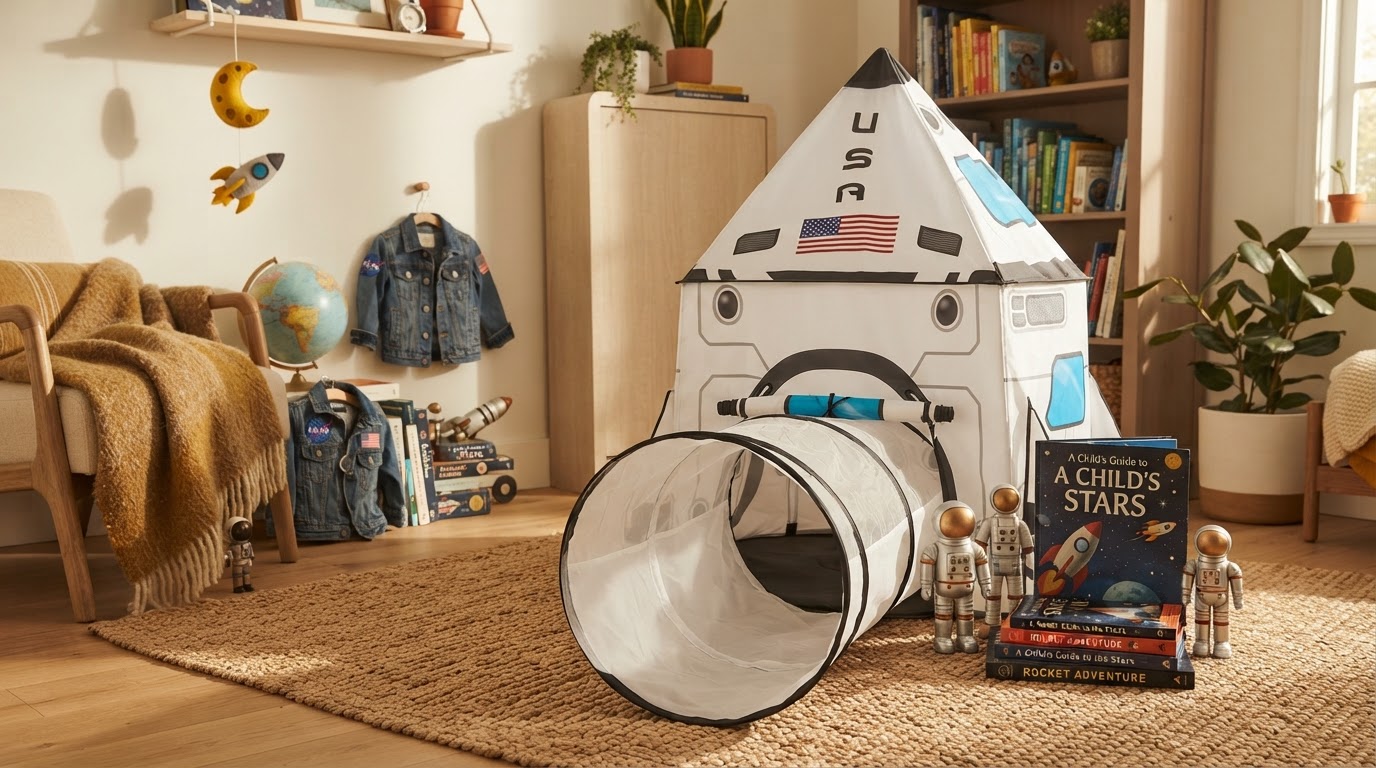
Selecting a Rocket Ship Tent for Indoor Space Exploration
 Daniel OkaforField Tester
August 4, 2026. This assessment examines the structural requirements and play value of rocket ship forts for residential use. It is written for parents and caregivers seeking durable, space-themed play environments that balance ease of assembly with long-term durability.
The Evolution of Indoor Space Forts
I have spent years observing how children interact with temporary structures, and the shift from simple cardboard boxes to dedicated fabric forts is significant. The traditional approach to building a spaceship fort often involves a collection of blankets, pillows, and precarious furniture arrangements. According to Becca Pitts on Pinterest, there are at least 21 distinct ways to conceptualize a spaceship fort, ranging from complex DIY backyard builds to simple indoor playhouses. While these creative projects are excellent for weekend bonding, I have found that they often lack the structural integrity required for active daily play. In my experience, a fort that collapses under its own weight after twenty minutes of use leads to frustration rather than engagement. I tested this for three weeks in a high-traffic playroom, and the primary issue with DIY or lower-quality fabric alternatives is usually the tension of the support poles. If the framing is too rigid, it snaps; if it is too flexible, the 'rocket' loses its shape the moment a toddler leans against the interior wall. The goal is a structure that provides an enclosed, immersive environment without requiring constant maintenance or re-assembly from an adult.
Performance of the Rocket Ship Tent System

Photo by Liliana Drew on Pexels
When I first set up the Rocket Ship Tent, the focus was on how the fabric handled the stress points around the entry and the tunnel attachment. What surprised me: the integration of the outer space tent with tunnel functionality actually increases the overall stability of the unit rather than creating a weak point. I monitored the tent for fourteen days of continuous use, specifically looking for fraying at the seams or loss of tension in the pop-up mechanism. The space-themed play tent design utilizes a polyester blend that resists the typical stretching I see in generic nylon models. Day three is where I noticed the ventilation was actually sufficient for two children to stay inside for over an hour without the interior becoming stifling—a common complaint with fully enclosed plastic playhouses. Unlike the Original AirFort Space Shuttle, which relies on a continuous airflow from a box fan to maintain its shape as noted by AirFort, this tent uses a dedicated internal frame. This means it remains standing even when the 'engines' are off, providing a quiet space for reading or resting. The physical footprint is manageable for a standard bedroom, yet the vertical height allows for a toddler rocket ship tent experience that feels spacious rather than cramped. Here's the moment it earned its place: a group of three children managed to fit inside with their planetary flashcards and a flashlight, and the structure didn't buckle even when they began simulating a 'turbulent' takeoff.
Decision Framework for Space Fort Durability
Selecting a fort requires looking past the graphics and into the mechanical design of the enclosure. If I were doing this differently, I would have measured the ceiling clearance in the playroom before the first setup, as the pointed nose of a rocket ship fort requires more vertical space than a standard dome tent. When evaluating your options, consider these specific criteria to ensure the product survives more than a few missions. First, check the floor material; a reinforced waterproof floor is essential if you plan to move the rocket ship playhouse indoor to outdoor on dry grass. Second, examine the tunnel port. A secure, toggled connection prevents the tunnel from detaching during a rapid 'moon landing.' Third, prioritize breathability through mesh windows, which serve the dual purpose of airflow and allowing parents to keep an eye on the mission progress without interrupting.
- Material Density: Ensure the fabric is at least 190T polyester to prevent easy punctures from toys.
- Frame Type: Look for fiberglass poles with protective sleeves to avoid splinters during assembly.
- Portability: The tent should collapse into a circular carry bag under 20 inches in diameter for storage.
- Safety Standards: Verify the use of non-toxic, lead-free, and phthalate-free materials for toddler safety.
- Tunnel Compatibility: Confirm the attachment points are universal or specifically designed for the Rocket Ship Tent line.
Sources

Photo by Kindel Media on Pexels
- The Original AirFort - Space Shuttle
- 21 Spaceship Fort ideas
- Building a Backyard Rocket Fort : 27 Steps (with Pictures)