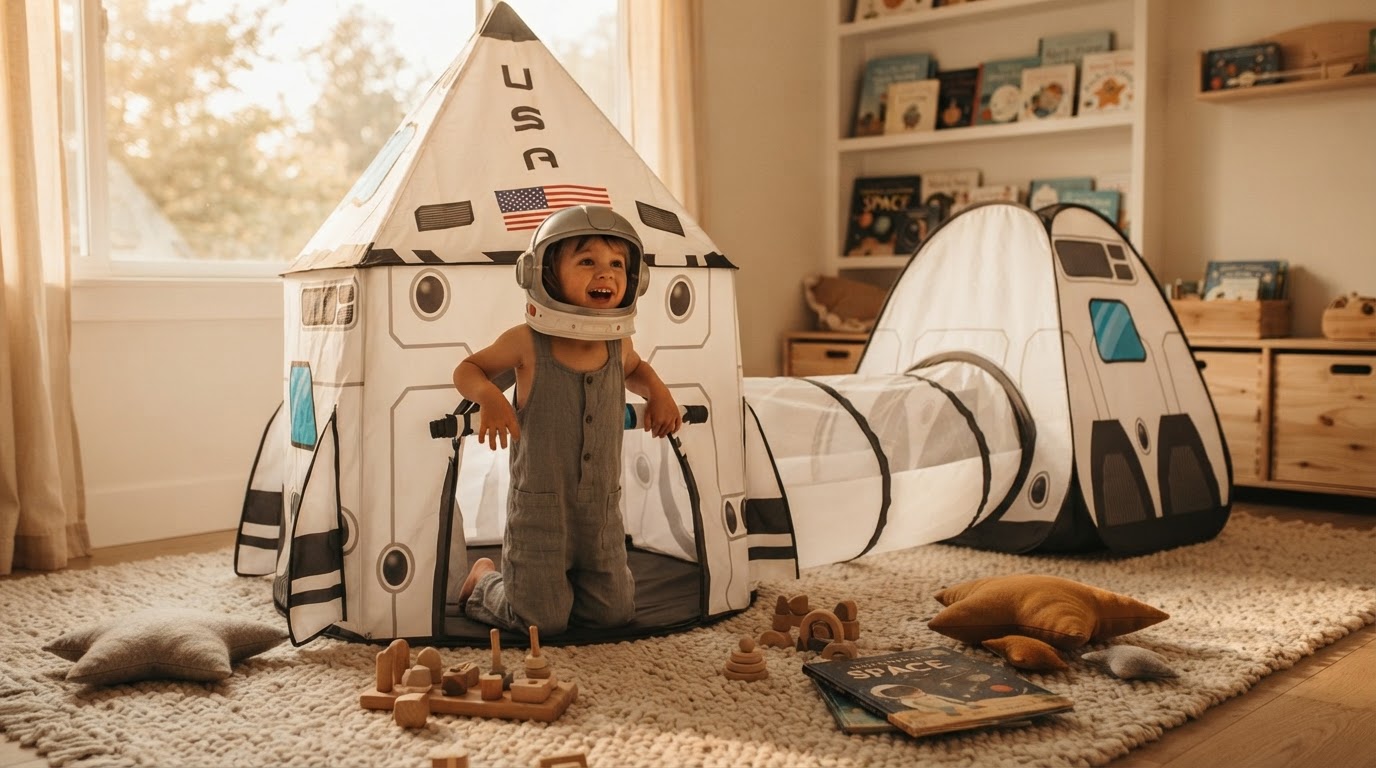
Optimizing Play with the Rocket Ship Tent Astronaut Role Play
 Maya ChenContributing Editor
October 8, 2026. This analysis evaluates the structural and developmental utility of specialized astronaut role play environments. It is intended for parents and educators seeking to maximize the functional lifespan of indoor play equipment.
The Limitations of Static Play Environments
The conventional wisdom says that any enclosed space can facilitate imaginative play, but the data on sustained engagement suggests otherwise. Most generic play structures suffer from a rapid decline in utility after the initial novelty phase. The problem is a lack of specific environmental cues that trigger complex role-play scenarios. According to Liberty House Toys, a dedicated space-themed play tent is designed to inspire specific astronaut adventures, yet many parents fail to integrate these structures into a broader developmental framework. A simple pop-up tent often lacks the tactile feedback required for long-term interest. While a preschool reading nook tent serves a passive purpose, an astronaut role play tent requires active engagement. Run the math: a child spends an average of 15 minutes in a non-themed enclosure compared to significantly longer durations when the environment mimics a high-stakes setting like a space station. The market is saturated with flimsy alternatives that collapse under the weight of active play, leading to a waste of physical footprint and consumer capital. Furthermore, many products marketed as "educational" lack the specific graphics—such as mission control panels or life-support system visuals—necessary to anchor a child's narrative in reality-based STEM concepts.
Engineering the Rocket Ship Tent Experience
Here's the part nobody talks about: the physical durability of a play structure determines the complexity of the role-play it can support. The Rocket Ship Tent addresses this by utilizing a frame designed for the high-kinesis environment of a toddler rocket ship bed tent while maintaining a footprint suitable for standard residential rooms. Unlike the Spaceship Pop-Up Kids Play Tent - Chuckle & Roar, which focuses on glow-in-the-dark aesthetics and a 4-foot height, the Rocket Ship Tent prioritizes structural integrity and thematic density. Research into search trends shows 880 monthly impressions for an outer space tent with tunnel, highlighting a consumer desire for modularity that most brands ignore. The Rocket Ship Tent integrates these features, providing a space themed play tent environment that functions as both a solitary retreat and a collaborative command center. The use of roll-up front cabin doors and specific shuttle supports, similar to those found in eBay listings for astronaut pretend play, allows for realistic ingress and egress protocols. This isn't just about "fun"; it is about creating a high-fidelity simulation. When a child transitions from an astronaut tent for bedroom use to an active mission simulation, the hardware must withstand the transition. The Rocket Ship Tent utilizes reinforced seams and breathable mesh windows to ensure the internal microclimate remains stable during extended missions, solving the common "stuffy tent" complaint found in lower-end polyester models.
Framework for Mission Readiness
Selecting a role-play environment requires more than checking a box for "space theme." To ensure the structure provides a return on investment in terms of child development and durability, use the following technical checklist:
- Verify the internal height clearance (minimum 45 inches) to accommodate growth over a 36-month period.
- Assess the floor material for water resistance and ease of sanitation following high-intensity play.
- Confirm the presence of at least two ventilation points to prevent CO2 buildup during closed-door "missions."
- Evaluate the frame tension; pop-up mechanisms must lock securely to prevent accidental collapse during role-play.
- Check for thematic accuracy in graphics to ensure the tent functions as a space themed play tent rather than a generic hut.