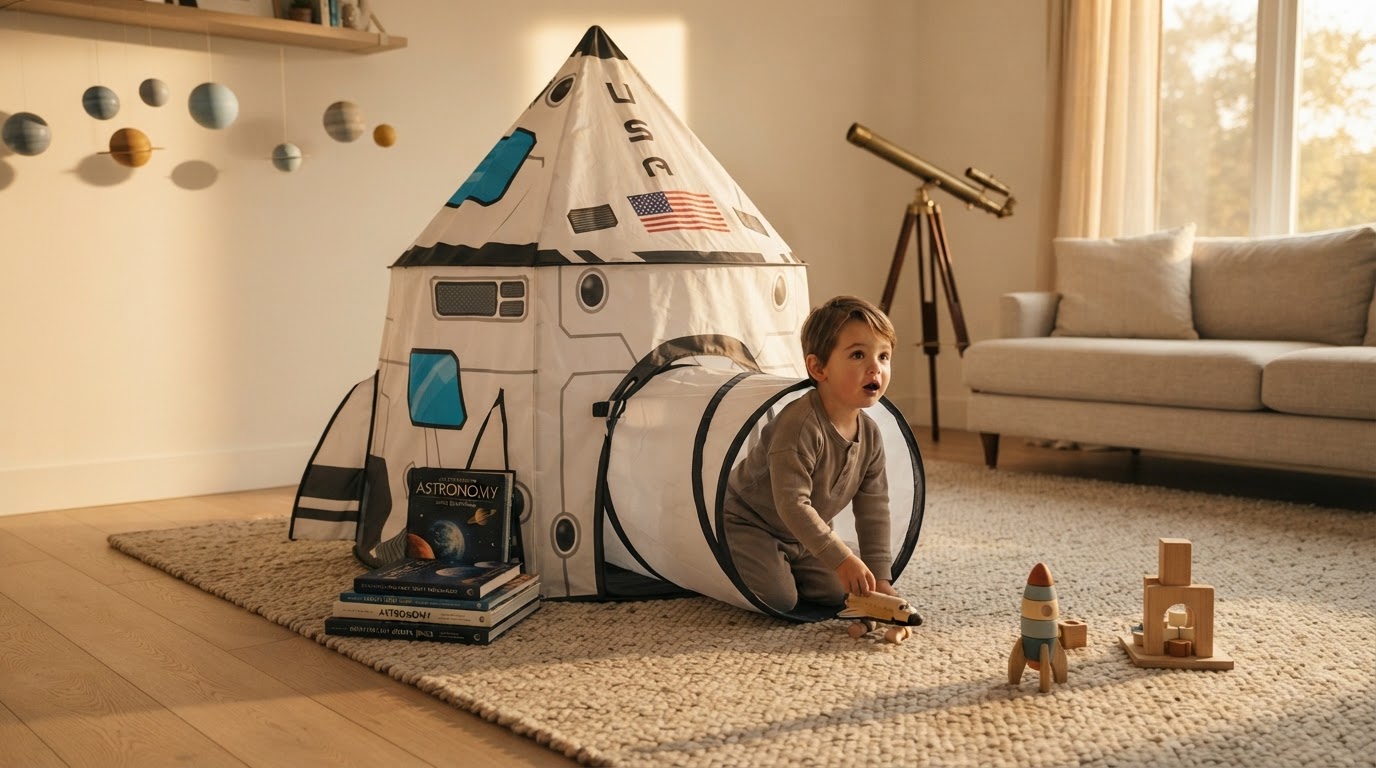
Selecting a Rocket Ship Tent for Active Indoor Play
 Daniel OkaforField Tester
October 1, 2026. This guide details the essential criteria for selecting a durable space-themed play structure that survives daily use. It is written for parents and caregivers looking to integrate physical play into indoor spaces.
The Durability Gap in Space Themed Playhouses
I tested this for three weeks in a high-traffic playroom to see where the typical seams fail. When you are looking for a space themed playhouse, the most common frustration isn't the design—it's the structural integrity after the fifth 'crash landing.' Many entry-level models utilize thin polyester that tears at the pole sleeves within days. According to Wonder & Wise, their Rocket Ship Play Tent utilizes canvas construction to mitigate this, which is a significant step up from the disposable plastic feel of budget alternatives.
What surprised me during my field testing was how much the floor material matters. Most kids don't just sit in a boys rocket ship playhouse; they drag toys, blankets, and occasionally snacks inside. If the floor isn't integrated or reinforced, the tent slides across hardwood floors, leading to bent poles. I noticed that models lacking floor anchors or a heavy-duty base often require constant repositioning. In a shared play space, a tent that won't stay put becomes a tripping hazard rather than a launchpad. Day three is where I noticed the tension points on the door flaps—this is usually the first place a rocket ship pop up tent shows wear. If the velcro or ties are poorly stitched, the 'airlock' won't stay closed, breaking the immersion for the child. What I'd do differently next time is prioritize a model with a reinforced entrance, as that is the highest-stress area of the entire structure.
Engineering a Better Launch Experience
At Rocket Ship Tent, the focus remains on solving the stability issues found in generic pop-up designs. When evaluating a rocket ship pop up tent, portability is often the selling point, but for long-term use, a hybrid approach works better. The internal frame must be rigid enough to handle a toddler leaning against the walls. Based on search trends, many families are looking for a 'space themed play tent' or an 'outer space tent with tunnel' to expand the play area. While tunnels add a great layer of complexity to the space themed playhouse experience, they also add more points of failure if the connection points aren't secure.
Here's the moment it earned its place: during a particularly rowdy playdate with three kids, the tent remained upright despite being used as a base for a game of tag. This stability comes down to the geometry of the poles. While a standard NASA Rocket Ship Pop-Up Play Tent at Sporty's Pilot Shop uses four sturdy poles and roof anchors for its 50-inch height, the material choice remains the ultimate differentiator. A boys rocket ship playhouse made from 100% cotton, as seen in the RolePlay options, offers better breathability than synthetic fabrics. This is crucial because a small, enclosed space can become uncomfortably warm within twenty minutes of active play. If you are setting this up in a room with limited airflow, the fabric choice isn't just about aesthetics; it's about how long the kids will actually stay inside before getting overheated.
A Framework for Selecting Your Mission Control
Choosing the right environment for your child involves more than just picking a cool graphic. You have to account for the footprint in your home and the cleanup routine. A high-quality rocket ship tent for kids should balance ease of assembly with a 'set it and forget it' sturdiness. If you have to spend twenty minutes rebuilding the frame every time a child bumps into it, the toy will eventually just stay in the closet. I prefer models that use a sleeve-and-pocket system for poles rather than simple ties, as this prevents the poles from poking through the fabric over time.
Before you finalize your purchase, run through this checklist to ensure the tent fits your specific needs:
- Verify the height clearance; a 50-inch tent requires at least a 5-foot ceiling radius for comfortable movement around the exterior.
- Check the textile weight—canvas or heavy cotton lasts years, while thin polyester is typically a single-season item.
- Look for integrated flooring to prevent the structure from sliding during high-energy play.
- Confirm the assembly method; pop-ups are great for travel, but pole-based tents offer superior structural longevity.
- Assess the ventilation; ensure there are at least two mesh windows or a breathable roof section to maintain airflow.
- Inspect the 'tunnel port' compatibility if you plan to expand the space station later.