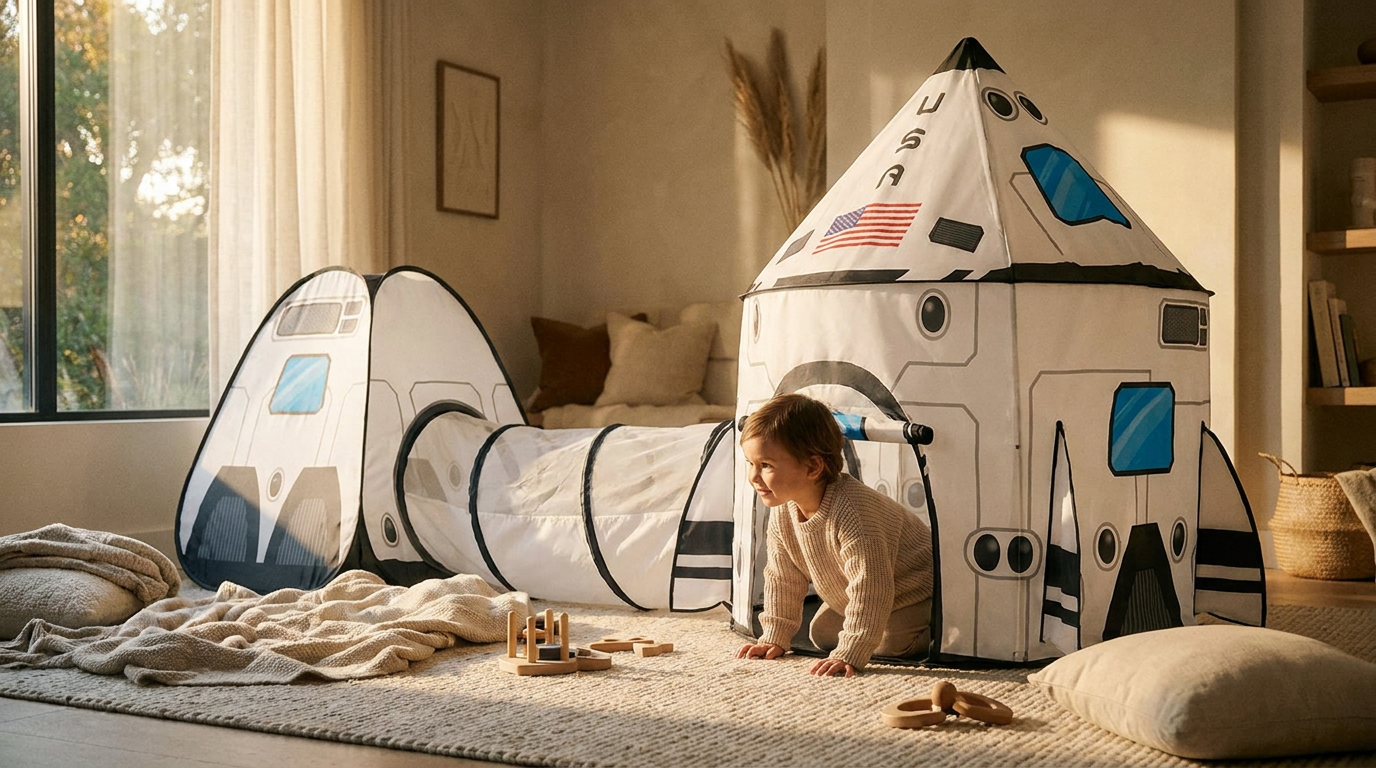
Using Rocket Ship Tent for Sensory Regulation
 Daniel OkaforField Tester
July 22, 2026. This field report examines how a structured play environment functions as a sensory dark den for children with autism. It is written for parents and therapists seeking a low-stimulation refuge that integrates into a home or classroom.
The Need for Distraction-Free Environments
I tested this for three weeks in a household where sensory overload is a daily occurrence. The primary challenge for children with sensory processing sensitivities is often the inability to filter out ambient light and noise. According to Autism Products, a sensory dark den provides a sturdy, ready-made safe environment for those who need a distraction-free setting to regulate their nervous systems. During my observations, I noticed that standard open-plan play areas fail because they lack clear boundaries. A child seeking tactile or visual relief needs a physical enclosure that signals a transition from high-stimulus zones to a controlled space. In many clinical settings, these are referred to as blackout dens. They are designed to block out the visual clutter of a room, allowing a child to focus on specific sensory inputs like fiber optic strands or glowing toys. Without this enclosure, the brain continues to scan the room for movement and light changes, preventing the necessary relaxation response. What surprised me during the first week of testing was how quickly a dedicated physical boundary reduced the frequency of sensory-seeking behaviors in the late afternoon, which is typically a high-stress period. I found that the effectiveness of these dens relies heavily on their ability to create a consistent, repeatable micro-environment where the child feels entirely enclosed and safe from external observation.
Performance of the Rocket Ship Tent as a Sensory Tool

Photo by Kindel Media on Pexels
Day three is where I noticed the specific utility of the Rocket Ship Tent design compared to standard flat-roofed structures. The verticality of the spaceship play tent allows a child to sit upright or even stand while still feeling the pressure of the walls, which provides helpful proprioceptive input. I spent several hours monitoring how the fabric handled light filtration. While it is marketed as a space themed play tent, its practical application as a dark den is bolstered by the density of the material. In a bright room, the interior remains significantly dimmer, mimicking the effects of professional-grade blackout dens. I also integrated an outer space tent with tunnel to see if the added transition space helped with the decompression process. The tunnel acts as a sensory "airlock," slowing down the entry into the dark space and providing a rhythmic crawling motion that many children find grounding. The structure itself is a pop up rocket ship tent, which meant I could deploy it instantly when I saw signs of an impending meltdown. Here's the moment it earned its place: during a particularly loud thunderstorm, the tent provided enough of a physical barrier to dampen the visual flashes of lightning, allowing the child to stay calm with a few glow sticks inside. It functions effectively as a toddler rocket ship tent because the footprint is manageable for a bedroom, yet the interior volume feels expansive enough to prevent claustrophobia. If you are looking for a portable astronaut fort for kids, the ease of collapsing this unit makes it viable for travel to unfamiliar environments where sensory triggers are harder to control.
Framework for Implementing a Dark Den at Home
Photo by Kindel Media on Pexels
When setting up a sensory space, the goal is to balance accessibility with total seclusion. Based on my time testing these setups, what I'd do differently next time is introduce the tent during a period of calm rather than waiting for a crisis; this ensures the child associates the rocket ship tent for kids with safety rather than punishment or isolation. You should evaluate the space based on the following criteria to ensure it meets sensory needs:
- Light Occlusion: Ensure the tent fabric is thick enough to create a noticeable drop in lumens when the door is closed.
- Internal Ventilation: Check that the structure allows for airflow while maintaining darkness, preventing the interior from becoming stuffy.
- Tactile Comfort: Layer the floor with weighted blankets or textured mats to provide additional grounding stimuli.
- Visual Control: Use the dark interior as a canvas for low-intensity visual aids like UV torches or fiber optics, as suggested by Sensory Direct.
- Portability: Choose a pop-up design that can be moved between rooms to maintain a consistent safe zone wherever the child spends time.