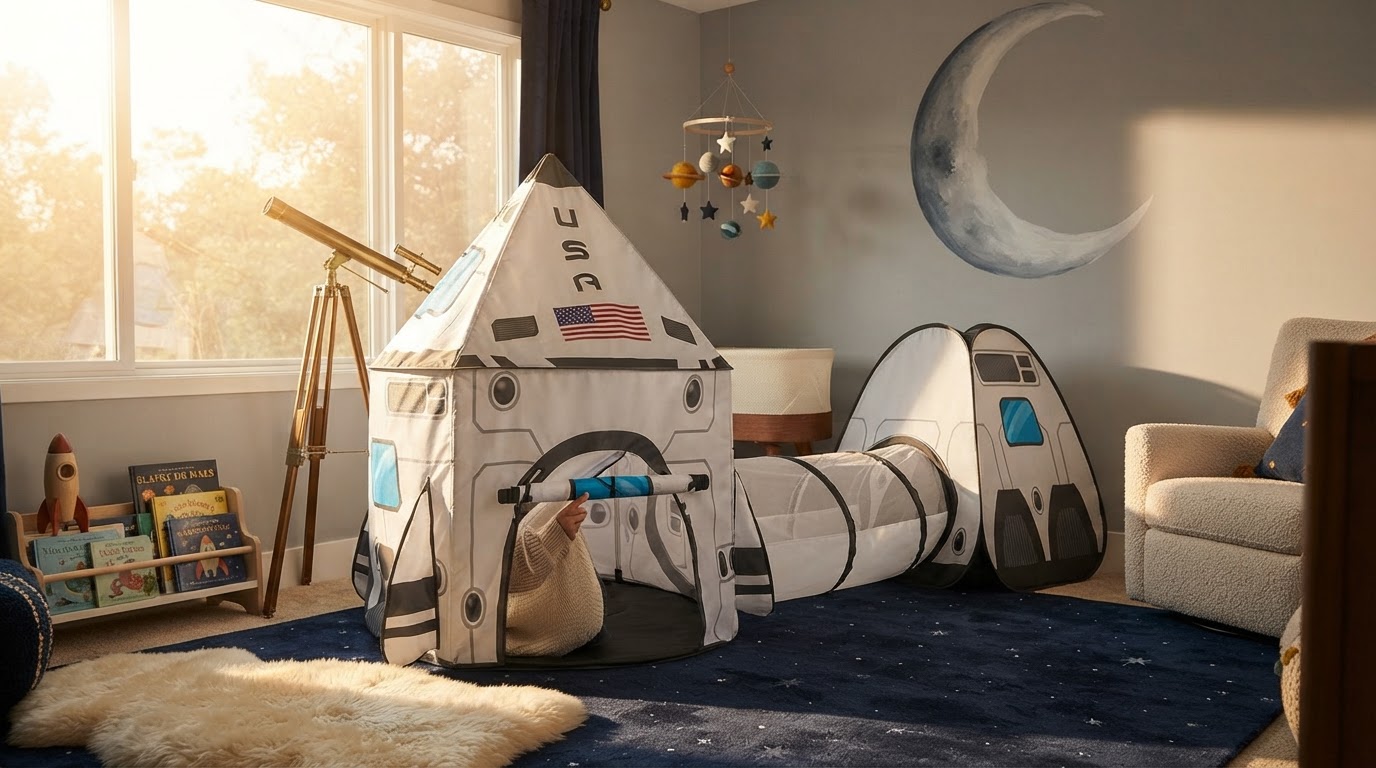
How do I style a Rocket Ship Tent in a space nursery?
 Jordan HaleStaff Writer
September 15, 2026 — Integrating a Rocket Ship Tent into a nursery requires a balance of floor-level architecture and celestial accents to create a functional, imaginative play space.
The first thing I noticed was how the light from a nearby window caught the silver lining of the tent, immediately transforming a quiet corner into a launchpad. Parents often seek ways to ground a high-concept nursery theme without committing to permanent structural changes or overwhelming the room with heavy furniture. By using a portable structure as a focal point, you create a dedicated zone for exploration that can evolve as the child grows.
Which decor elements pair with a Rocket Ship Tent?
Successful space-themed nurseries pair high-contrast textiles with soft, ambient lighting to mimic the depth of the night sky. According to design resources at Pottery Barn Kids, incorporating galactic decor like moon lamps and galaxy bedding provides the necessary visual layers to support a large central piece like a tent. I keep coming back to the way a simple navy rug with white star patterns anchors the tent, preventing it from feeling like an isolated object in the middle of the room. It turns out that adding tactile elements, such as plush planets or textured wall decals, helps bridge the gap between the smooth polyester of the tent and the softer environment of a crib or changing station. Brands like Lambs & Ivy offer specific collections including crib mobiles and plush toys that echo these cosmic motifs, ensuring the theme feels intentional rather than cluttered.
How does tent placement affect nursery flow?
Placement should prioritize both visibility for the parent and a sense of enclosure for the child to foster a secure play environment. When I positioned a preschool reading nook tent in a corner, the room felt instantly more organized, providing a clear boundary between the sleep zone and the play zone. It is essential to consider the footprint; an astronaut tent for bedroom use typically occupies a 40-to-50-inch diameter, so leaving a clear perimeter for foot traffic is vital. Somewhere around week two, I realized that placing the tent adjacent to a bookshelf encouraged more spontaneous quiet time, as the structure naturally draws children inward for focused activities. For those managing smaller rooms, knowing how to fold a Rocket Ship Tent allows the nursery to remain versatile, reclaiming floor space when the primary activity shifts from play to rest.
Quick answers
Q: What color palettes work best with space-themed tents? A: Deep navy, charcoal, and slate grey provide a sophisticated backdrop, while metallic silver or bright orange accents on the tent add necessary pops of color. Nestig suggests that whimsical decor and furniture in these tones can inspire dreams of exploration while remaining visually cohesive.
Q: Can a Rocket Ship Tent be used in a nursery with limited space? A: Yes, because most quality play tents are designed for easy assembly and disassembly, they can be stored flat when not in use. A standard Rocket Ship Tent typically requires a circular floor area of approximately 4 feet to stand fully upright without touching surrounding furniture.
Q: Are there specific lighting safety tips for nursery tents? A: Always use battery-operated LED string lights or UL-listed lamps that remain cool to the touch to prevent heat buildup inside the fabric structure. Avoid using traditional incandescent bulbs or placing the tent directly against floor heaters or radiators.
Learn more about Rocket Ship Tent at https://rocketshiptent.com.