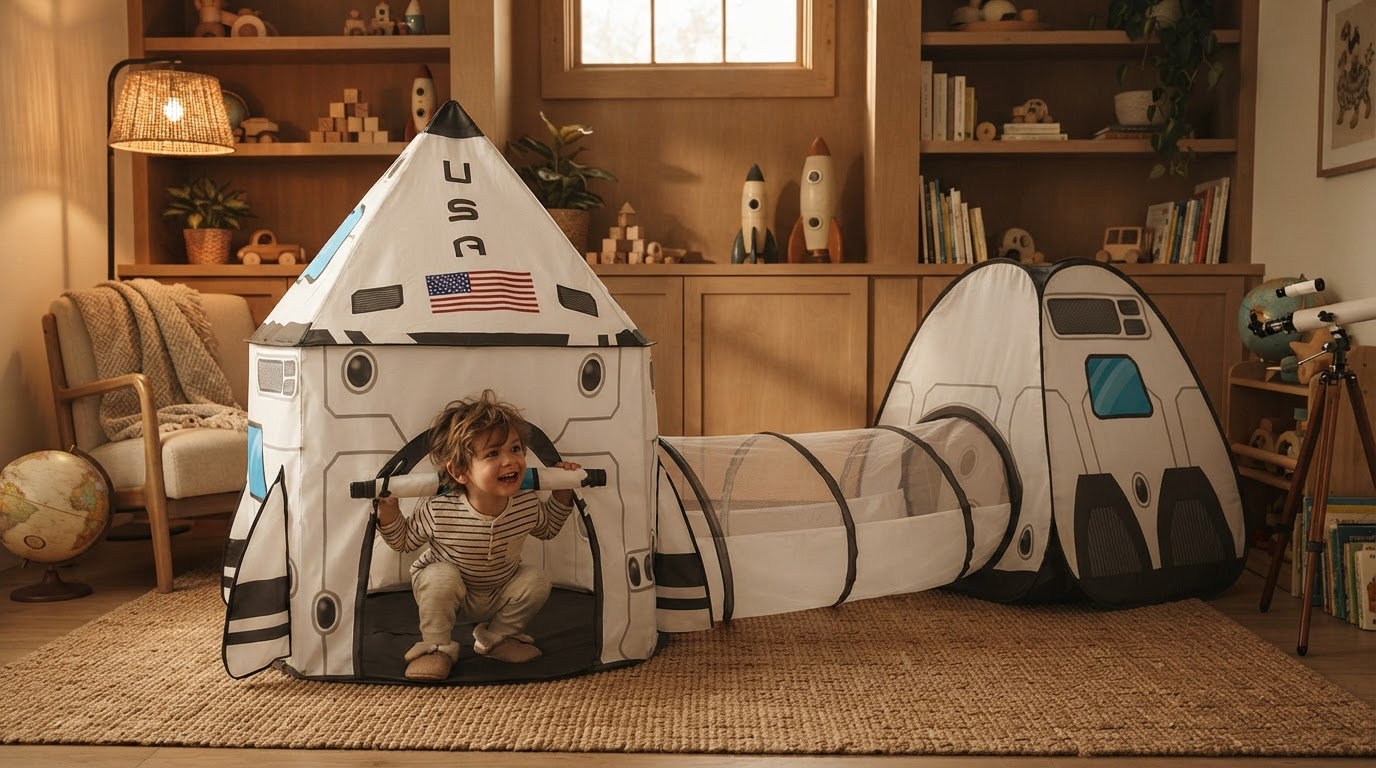
Optimizing Play Space with a Rocket Ship Tent for Kids
 Priya RamanSenior Analyst
October 25, 2026. This analysis examines the structural and cognitive benefits of integrating a Rocket Ship Tent into residential play environments. It is intended for parents and educators seeking to maximize limited square footage through purposeful, theme-based furniture.
Think of it as a matrix of physical footprint versus imaginative utility. When evaluating play structures, two axes matter here: the durability of materials and the ease of deployment within a standard room layout. The modern residential play space is increasingly constrained by multi-functional room requirements, leading to a demand for structures that can serve as both a private reading nook and a high-energy play zone. According to Sporty's Pilot Shop, a standard NASA Rocket Ship Pop-Up Play Tent typically measures 50”h x 30”w and requires simple assembly involving roof and floor anchors to maintain its upright profile. This specific footprint allows for placement in corners or adjacent to a space themed playhouse without obstructing primary traffic paths. However, the challenge for most consumers is not just finding a tent, but finding one that withstands the mechanical stress of daily use. While many pop-up models prioritize portability, they often sacrifice the structural rigidity found in canvas or cotton alternatives. The tension between a "quick-fold" design and a "long-term fixture" design creates a decision gap that requires a clear framework to navigate. By categorizing these structures based on their material density and assembly complexity, we can better understand how a boys rocket ship playhouse serves as a developmental anchor rather than a temporary distraction.
The Rocket Ship Tent addresses these spatial and durability concerns through a refined balance of textile engineering and ease of use. Unlike basic nylon models that may lack ventilation or structural integrity, premium options such as the Rocket Ship Play Tent for Kids utilize 100% cotton construction and space-themed graphics to provide a tactile, breathable environment. Once you see it this way, the tent ceases to be a mere toy and becomes a specialized zone for cognitive development. The inclusion of sturdy poles ensures that the structure remains stable even during active play sessions, a common pain point identified in Reddit discussions regarding a rocket ship playhouse indoor. Furthermore, the integration of a space themed playhouse aesthetic allows the tent to blend into existing room decor more effectively than high-contrast, low-quality plastics. For those managing smaller quarters, such as an astronaut tent for bedroom setup, the ability to fold the unit flat into a carry bag is essential. Data indicates that search queries for a "space themed play tent" have reached significant volume, reflecting a consumer shift toward items that offer high "play value per square inch." The Rocket Ship Tent fulfills this by providing a defined boundary for a child's activities, which can reduce overall clutter in the surrounding room. By utilizing a boys rocket ship playhouse as a central hub, parents can organize related toys—like blocks or books—within the tent's perimeter, effectively compartmentalizing the play area.
The decision rule: Choose a tent based on the intended duration of the installation and the age of the primary user. For younger children, a pop-up model with soft anchors is often sufficient, whereas older children benefit from the stability of canvas and pole systems. When selecting a Rocket Ship Tent for your home, evaluate the following criteria to ensure the best fit for your specific environment:
- Material Density: Opt for 100% cotton or heavy-duty canvas for long-term indoor use to ensure breathability and tear resistance.
- Footprint Compatibility: Verify that the 30-inch to 40-inch diameter fits within your designated "active zone" without blocking exits.
- Assembly Type: Determine if you require a permanent pole-based structure or a pop-up mechanism for frequent travel or storage.
- Ventilation Features: Ensure the design includes mesh windows or open ports to maintain airflow during extended periods of use.
- Thematic Integration: Consider how the graphics align with other elements, such as an astronaut tent for bedroom, to create a cohesive aesthetic.
- Safety Anchors: Confirm the presence of floor or roof anchors if the tent will be placed on slick surfaces like hardwood or laminate.