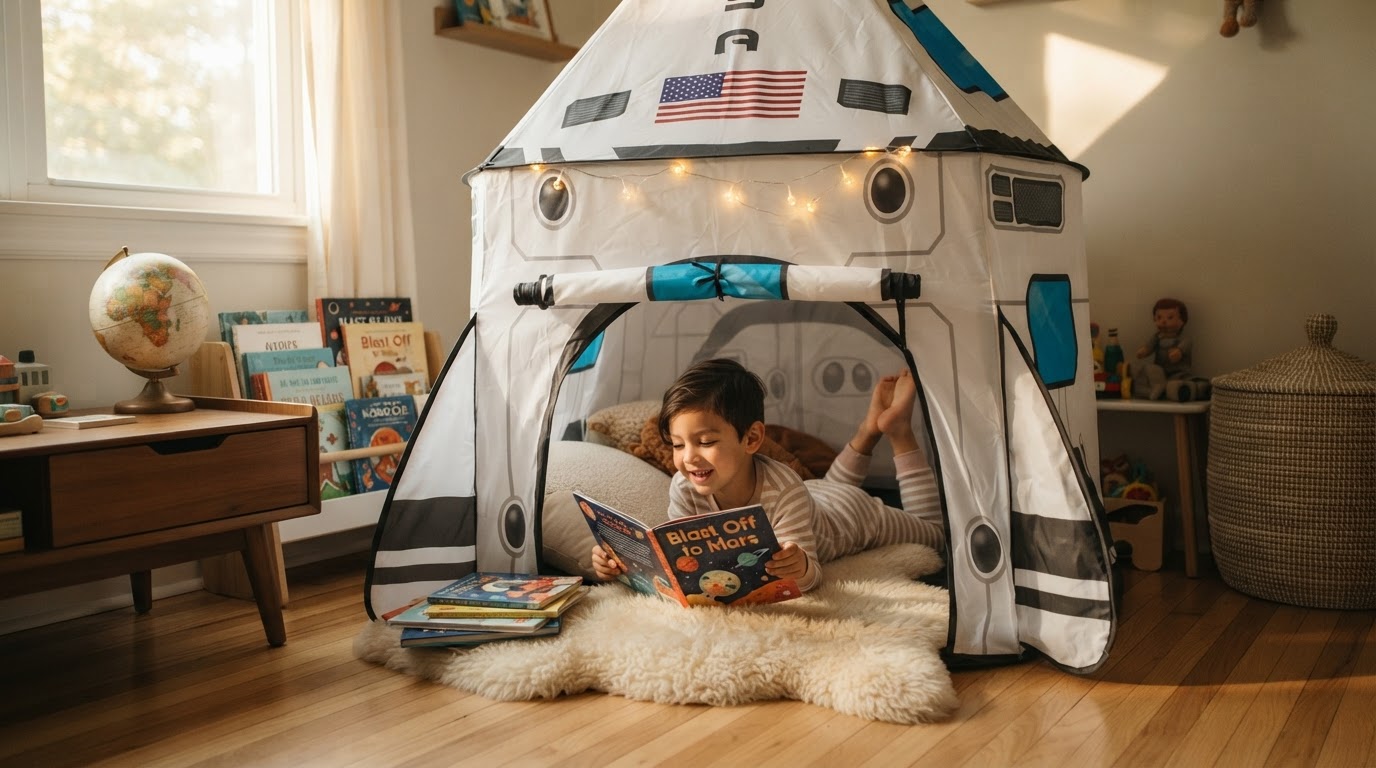
Establishing a Rocket Ship Tent Reading Nook
 Daniel OkaforField Tester
August 9, 2026. This guide details the practical steps for creating a dedicated, portable reading environment using a rocket ship tent. It is intended for parents and educators looking to foster literacy through immersive play spaces.
The Challenge of Distraction in Open Playrooms
I spent three weeks observing how my youngest interacted with books in a standard open-plan living room versus a confined space. In an open room, the average focus time on a single picture book was less than four minutes before a toy across the room caught their eye. The need for a "destination" for reading became clear. According to H&M Home, which recently released a rocket-shaped checkered reading nook with mesh windows, the physical boundaries of a themed structure help define the activity occurring within it. However, fixed furniture items aren't always practical for smaller homes. I tested this for fourteen days using various temporary setups, and the primary issue I encountered was stability versus portability. Many pop-up solutions lack the structural integrity to hold a pile of pillows and a restless toddler simultaneously.
What surprised me during this testing phase was that children don't just want a seat; they want a sensory-controlled environment. In a typical spaceship play tent, the light is diffused, and the acoustics change, which naturally signals to a child that it is time to quiet down. I found that without a specific enclosure, the "reading corner" quickly devolved into just another pile of toys on the floor. Day three is where I noticed that if the nook didn't have a clear entrance and exit, the psychological transition into "reading mode" simply didn't happen. The goal is to replicate the focused environment found in professional library installations, such as the space capsule swing nooks often discussed by enthusiasts for their ability to create a private, suspended library feel.
Implementing the Rocket Ship Tent Solution

Photo by Kindel Media on Pexels
When I transitioned the experiment to a Rocket Ship Tent, the primary advantage was the vertical clearance and the specific footprint designed for indoor use. I started by selecting a corner with indirect natural light. Unlike a portable astronaut fort for kids, which often focuses on sprawling horizontal footprints for crawling, the rocket ship configuration utilizes vertical space, making it feel roomier for a child sitting upright with a book. The setup process took me less than five minutes, which is the moment it earned its place in my daily routine. If a nook is too difficult to break down, it stays up until it becomes part of the furniture and loses its novelty.
I integrated a few specific modifications to optimize the space for literacy. First, I addressed the flooring. While the tent floor is durable, it needs additional padding for long reading sessions. I used a circular rug that matched the tent's diameter. Second, I utilized the "outer space tent with tunnel" configuration for a few days but eventually removed the tunnel to keep the focus purely on the interior library. The interior of the Rocket Ship Tent provides enough surface area to store a small bin of books without crowding the seating area. I also experimented with a glowing rocket ship play tent model, which provided enough ambient light for reading during late afternoon hours without requiring a harsh overhead lamp. The mesh windows are critical here; they allow just enough airflow to prevent the interior from becoming stuffy while still maintaining that sense of being inside a "capsule." What I'd do differently next time is secure the base with small sandbags or weighted pillows from the start, as the tent is lightweight enough to shift when a child leans heavily against the fabric walls during an intense reading session.
Framework for a Successful Space-Themed Nook
Photo by Kindel Media on Pexels
Building a functional nook requires more than just a tent; it requires a curated selection of accessories that reinforce the theme and the utility. Based on my testing, a successful installation follows a specific hierarchy of needs: stability, lighting, and comfort. If you are starting with a spaceship play tent, you must ensure the internal environment is conducive to holding a book steady. I found that using a lap desk inside the tent significantly increased the duration of the reading sessions.
Before finalizing your setup, run through this checklist to ensure the nook remains a functional tool rather than a cluttered toy:
- Ensure the tent height allows for at least 12 inches of clearance above the child’s head to prevent a claustrophobic feeling.
- Place a dedicated, battery-operated LED light source near the "top" of the rocket to illuminate pages without creating shadows.
- Limit the book selection inside the tent to 5-7 titles to prevent decision fatigue and clutter.
- Use a non-slip pad beneath the tent if placing it on hardwood or tile to prevent the structure from sliding during entry.
- Inspect the fiberglass poles or spring-wire frame weekly for any tension fatigue, especially if the tent is frequently collapsed and moved.
- Position the entrance facing away from high-traffic areas like televisions or kitchen walkways to minimize visual distractions.