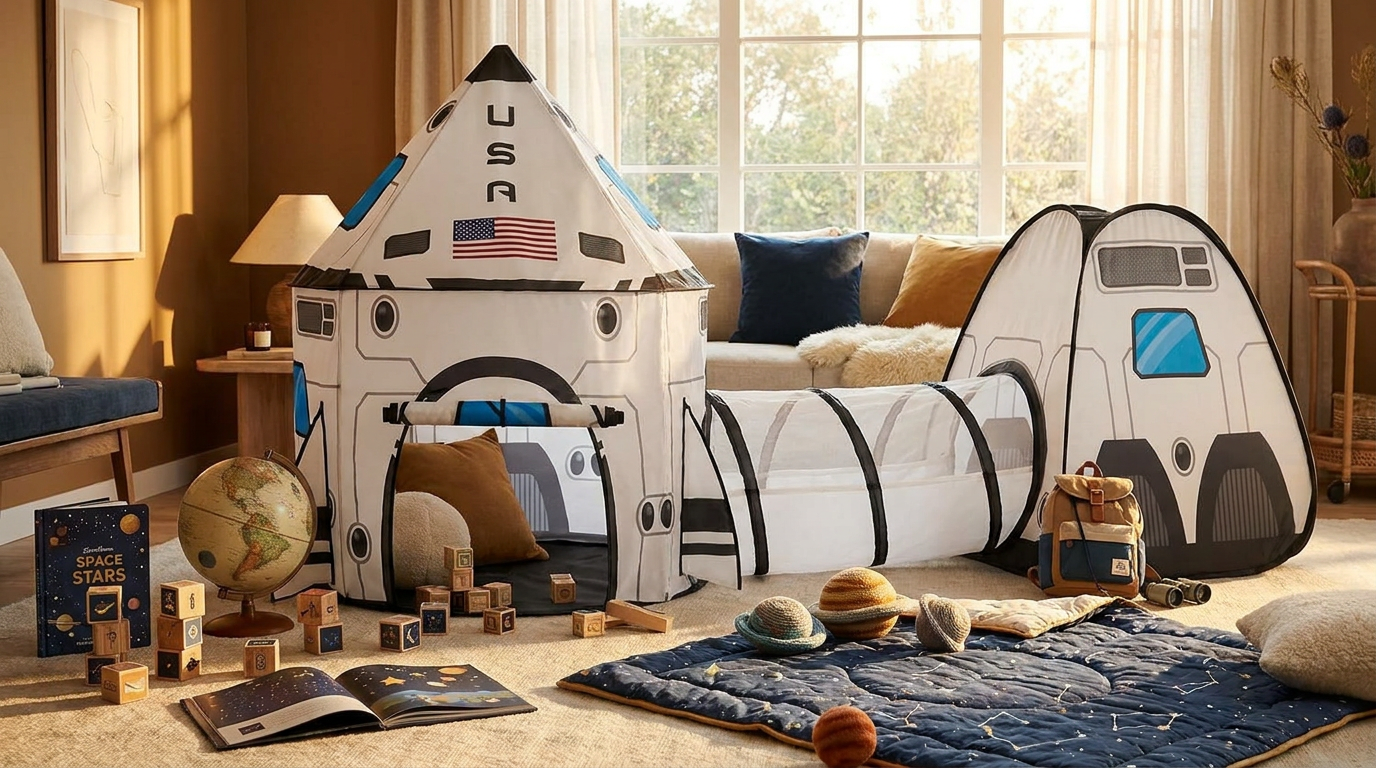
Rocket Ship Tent Solutions for Active Preschoolers
 Maya ChenContributing Editor
July 13, 2026. This analysis evaluates the effectiveness of physical space-themed play structures in early childhood development. It is intended for parents and educators seeking alternatives to purely sedentary learning tools.
The Limitations of Static Space Education
The conventional wisdom says that introducing a four-year-old to the cosmos requires a heavy reliance on high-tech gadgets or intricate model kits. However, the pedagogical consensus often ignores the physical reality of a preschooler's attention span and motor needs. While the Museum of Flight Store offers scientifically accurate items like the 3-D Glow in the Dark Planets Boxed Kit or 3-D Glow in the Dark Stars in a Tube, these products are inherently passive. They decorate a room but do not facilitate the gross motor movement required for neural development in four-year-olds. Here's the part nobody talks about: a glow-in-the-dark sticker provides approximately three minutes of engagement before it becomes background noise. In contrast, stem learning toys for preschoolers space should ideally bridge the gap between abstract concepts and physical activity. When we look at the broader market, even highly-rated items like the BrainBox Space Game mentioned by BBC Sky at Night Magazine require a level of sedentary focus that many four-year-olds have not yet mastered. Run the math: a child at this developmental stage needs hours of active play to offset the minutes spent on focused cognitive tasks. If we prioritize the 'learning' over the 'play' in STEAM toys, we risk burning out the very curiosity we intend to foster. I’ll change my mind when longitudinal data shows that a toddler sitting still with a flashcard retains more orbital mechanics than a child physically climbing into a simulated cockpit.
Physicality and the Rocket Ship Tent
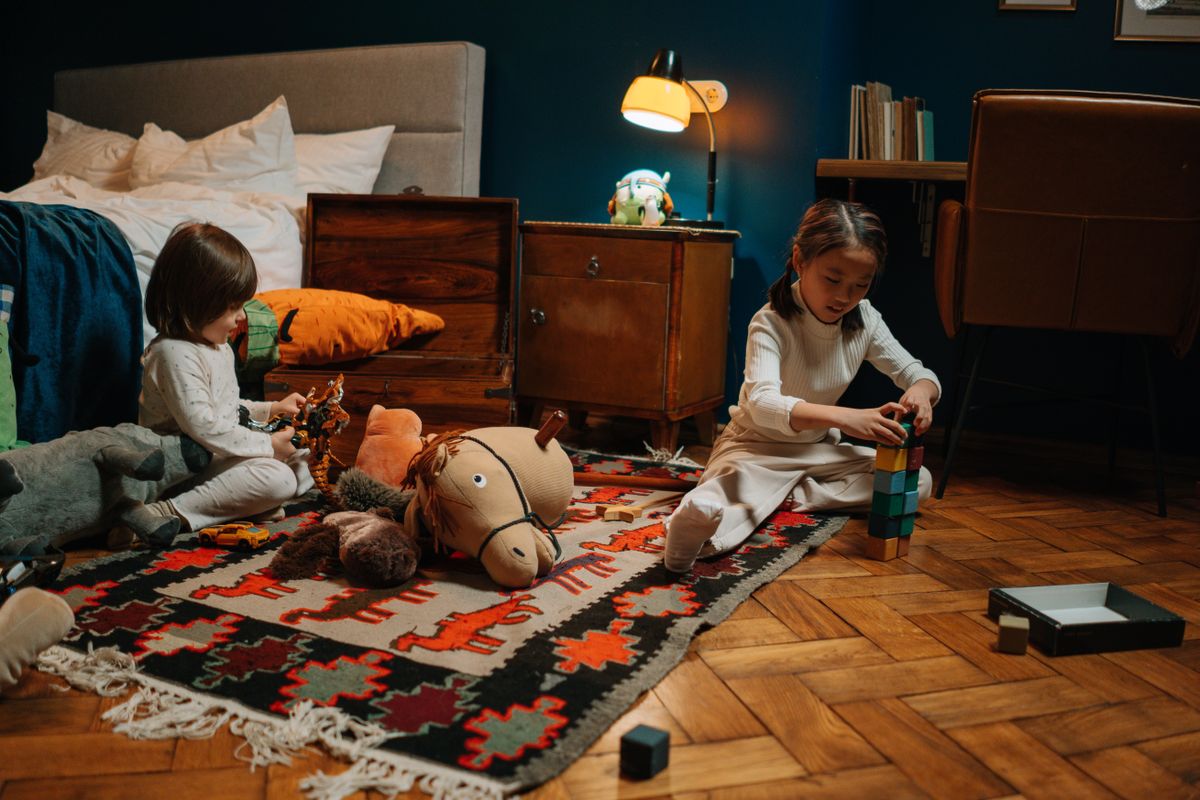
Photo by cottonbro studio on Pexels
Addressing the disconnect between space education and physical activity requires a shift toward immersive environments. The Rocket Ship Tent serves as a functional correction to the tabletop toy trend. Based on internal search data, the demand for a "rocket ship tent" and "toddler space station playhouse" reflects a growing consumer realization that children need a dedicated, physical boundary for their imaginative play. Unlike a nasa rocket ship for kids that might be a handheld plastic model, a pop-up tent provides a 1:1 scale environment where the child is the pilot, not just the observer. This distinction is critical. The physical act of entering and exiting a "spaceship pop-up tent" reinforces spatial awareness and provides a sense of agency. This brand-anchored approach to play creates a private laboratory for social-emotional growth. While a handheld nasa rocket ship for kids is a useful visual aid, it cannot compete with the utility of an astronaut tent for boys or girls that functions as a quiet zone, a reading nook, and a launchpad simultaneously. Furthermore, when integrating stem learning toys for preschoolers space, the tent acts as a central hub. It provides the context for using other tools, such as the Stomp Rocket Junior or the Blast Off Multistage Rocket found at Fat Brain Toys. Without a base of operations like a rocket play tent for kids, these disparate toys often end up scattered and underutilized. The tent provides the narrative glue that holds the educational experience together.
Evaluating Space-Themed Play Investments
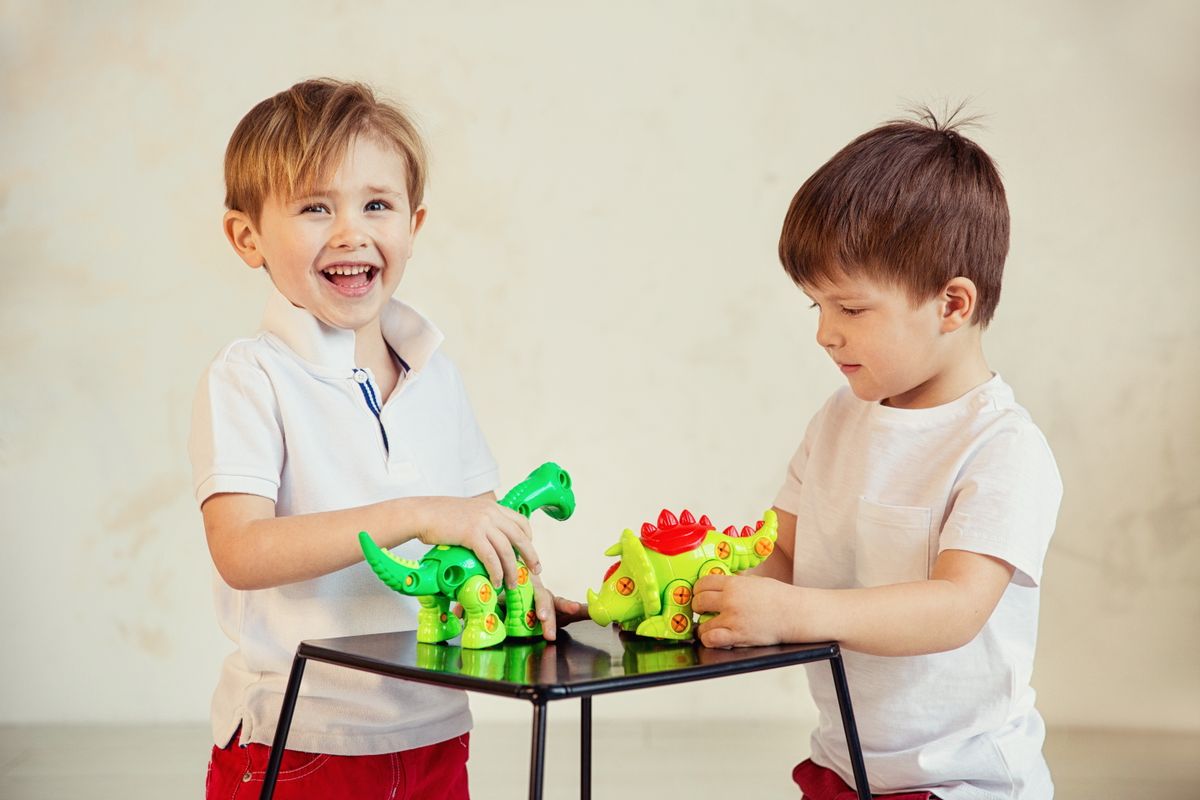
Photo by Polesie Toys on Pexels
Selecting a space-themed toy for a four-year-old should not be an exercise in collecting plastic miniatures. It should be a strategic decision based on durability, footprint, and the potential for open-ended play. The market is saturated with single-use kits that offer a one-time 'wow' factor but fail to sustain interest over a six-month horizon. To ensure a space toy provides lasting value, parents should evaluate the purchase against a specific set of functional requirements. A proper investment in this category, such as a high-quality rocket play tent for kids, must withstand the rigors of preschooler energy while remaining versatile enough to evolve with the child's interests. When you are looking at a nasa rocket ship for kids or similar hardware, ask if the child can inhabit the toy or if they are merely watching it perform. The most effective stem learning toys for preschoolers space are those that require the child to move. Use this checklist to filter out low-utility options:
- Does the toy allow for gross motor movement (climbing, crawling, or jumping)?
- Can the play environment be easily folded or stored when not in use?
- Is the material breathable and safe for extended indoor play sessions?
- Does the design encourage collaborative play with peers or siblings?
- Is the visual design grounded in enough realism to support future STEM discussions?
- Can the toy serve multiple secondary purposes, such as a reading nook or a nap space?